Natural Ways to Increase Testosterone That Actually Work
Before you buy anything, there are four free levers that outperform almost every capsule on the shelf. Here is how they rank, why they work, and where a supplement honestly fits.
Quick answer: what are the fastest natural ways to increase testosterone?
The fastest natural ways to increase testosterone are the unglamorous ones: sleep seven to nine hours, train against resistance two to three times a week, and shed excess body fat so less testosterone converts to oestrogen. Correcting a genuine vitamin D, zinc or magnesium shortfall helps too. Expect eight to twelve weeks, not days.
- Sleep first: short sleep measurably lowers next-day testosterone, so seven to nine hours is the single biggest free lever you own.
- Train and lean out: resistance work plus losing excess body fat reduces aromatisation and supports healthy levels over months, not days.
- Fix real shortfalls: vitamin D, zinc and magnesium help when you were genuinely deficient — not as megadoses stacked on top of enough.

The men who see the biggest change almost always fixed sleep, training and body fat first. That is inconvenient for the supplement aisle, and it is what the evidence keeps saying.
If you have typed natural ways to increase testosterone into a search bar, you probably want one of three things back: steadier energy, better performance in the gym, or a bit more drive. The good news is that the levers that move all three are the same, they are largely free, and they are far more powerful than anything you can swallow. The less welcome news is that they ask for consistency rather than a credit card. This article ranks the fundamentals honestly, explains why each one works, and is upfront about where a supplement like HorseFil can support the effort rather than replace it.
The four fundamentals, ranked by how much they move
There is a hierarchy here, and pretending otherwise is how people waste money. In rough order of impact for a typical man, the four levers are sleep, body composition, resistance training and micronutrient repletion. A capsule sits below all four. If you fix the top of the list and ignore the bottom, you will feel a difference. If you buy from the bottom and ignore the top, you usually will not.
What makes this list trustworthy is that the outcomes men care about — energy, drive, gym performance, body composition — overlap almost completely with the outcomes these four levers influence. You do not have to believe a single hormone claim to benefit from any of them, which is exactly why they belong first.
Sleep: the most underrated natural way to increase testosterone
Testosterone is produced on a daily rhythm, and most of the release happens during sleep. That is not a wellness slogan; it is the reason sleep sits at the top of the list. In a tightly controlled study, restricting healthy young men to around five hours of sleep for one week lowered their daytime testosterone by a meaningful margin compared with their well-rested baseline — and the drop was large enough to be visible within days. Nothing you can buy reverses that as cheaply as going to bed.
The practical version is unromantic. Aim for seven to nine hours on a schedule your body can predict. Keep the room dark and cool, park the phone before lights-out, and treat alcohol as the sleep disruptor it is rather than the sleep aid it pretends to be. Alcohol fragments the second half of the night, which is precisely the window that matters most for recovery and hormonal rhythm. If you improve one thing this month, improve sleep — it is the highest-yield lever on the entire list.
Body fat and the aromatisation problem
Fat tissue is not inert. It is metabolically active, and one of the things it does is convert testosterone into oestrogen through an enzyme called aromatase. The more excess body fat a man carries, the more of this conversion happens, which is one reason lower testosterone tracks with higher body-fat percentage in population data. Losing excess fat reduces that conversion, and men who lose a meaningful amount of weight tend to see their measured testosterone rise as they do.
Two cautions keep this honest. First, this lever is strongest for men who are genuinely carrying excess fat; a lean man will not squeeze the same effect out of losing a couple of kilos he does not have to spare. Second, the crash approach backfires. Very aggressive, very low-calorie or near-zero-fat diets can suppress testosterone rather than support it, because the body reads severe restriction as a reason to down-regulate. A moderate, sustainable deficit that preserves muscle beats a punishing one that costs you both fat and hormones.

Botanicals like maca sit in the stamina-and-drive lane, not the hormone lane. Keeping those categories separate is the fastest way to read a men's label without being misled.
Resistance training beats cardio for this specific job
If the goal is body composition, drive and physical capacity, lifting heavy things repeatedly is the most efficient tool you have. Resistance training builds and preserves muscle, improves insulin sensitivity, lifts mood and sharpens physical function — the exact cluster of outcomes men tend to blame on low testosterone. It produces an acute, short-lived rise in testosterone around a hard session, and while that spike is modest and temporary, the long-run body-composition and metabolic gains are the part that actually matters.
You do not need a heroic programme. Two or three full-body sessions a week, built around compound movements — squats, hinges, presses, rows — taken close enough to genuine effort to force an adaptation, will do more for the outcomes on this list than any bottle. Endless steady-state cardio is good for your heart but is not the specialist tool here; it can even work against you if it crowds out recovery and sleep. Train hard, recover fully, and let the fundamentals compound.
Micronutrients: repletion, not megadosing
This is the lever most often mis-sold. Vitamin D, zinc and magnesium all matter for male physiology, and correcting a genuine shortfall of any of them can nudge measured testosterone in the right direction. In a year-long controlled trial, overweight men given vitamin D showed a rise in total testosterone while the placebo group did not. The classic zinc work points the same way from the opposite side: deliberately restricting dietary zinc lowered serum testosterone in healthy men, and supplementing marginally deficient older men raised it. Magnesium plays a supporting role in sleep quality and neuromuscular function, which loops back to the top of this list.
Repletion is not boosting. Fixing a shortfall you actually have moves the needle; piling more on top of a level that is already adequate almost never behaves the same way.
The takeaway is to test before you treat where you can. A blood test tells you whether you are genuinely low in vitamin D; a look at your diet and symptoms flags likely zinc or magnesium gaps. If you are short, correcting it is cheap and worthwhile. If you are already replete, more is not better and can be counter-productive. This is exactly the distinction covered in our guide to what to look for in a natural testosterone booster, which is worth reading before you buy anything with these minerals on the label.
Once the fundamentals are covered
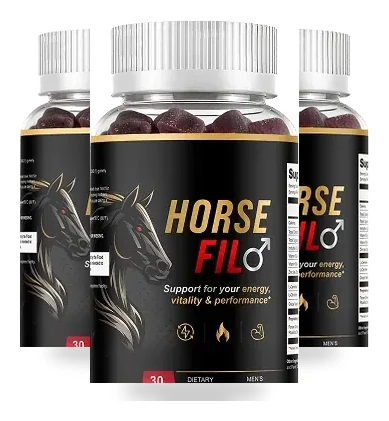
If your sleep, training and body composition are already handled and you want to test one product properly, HorseFil is a once-daily men's gummy — L-citrulline and L-carnitine with ginseng, maca and rhodiola — built for steadier stamina and work capacity, not a hormone claim. No autoship, and a satisfaction window long enough to run a proper eight-to-twelve-week test.
Get OfferThree myths worth clearing up
Myth one: a booster replaces the lifestyle work. It does not, and no honest label claims it does. A supplement is an add-on to the fundamentals, useful at the margins once the free levers are in place. If you are sleeping six hours and never training, the highest-return purchase is not a bottle — it is an earlier bedtime. Reverse the order and you have paid for the least powerful lever while ignoring the strongest.
Myth two: results should show up in a week. Sleep changes can register quickly, but body composition, training adaptation and steadier day-to-day energy build over eight to twelve weeks. Anyone promising a transformation in days is selling the promise. The men who succeed here judge the trend over a couple of months, not the readout on any single morning.
Myth three: more is always better. This is the megadosing trap. Sleep past nine hours is not a bonus, extreme calorie cuts backfire, over-training suppresses recovery, and stacking minerals you are not short of does nothing useful. The fundamentals reward consistency at sensible doses, not heroics. For a longer look at how average levels shift with age — and what actually follows from that — our piece on testosterone support for men over 40 covers the ground in detail.
A realistic eight-to-twelve-week plan
Here is the order of operations the evidence supports, written so you could start it tomorrow.
Weeks one to four: fix the free things. Lock in seven to nine hours of sleep on a consistent schedule, cut alcohol to a level you would be comfortable writing down, and start two or three resistance sessions a week. Do not add a supplement yet. If your energy and drive improve here, you have your answer and it cost nothing.
Week four: measure what you can. If symptoms persist, ask your doctor about a morning testosterone test and a vitamin D level. Testing before supplementing is the only way to know whether you fall into the group where the repletion evidence applies, and it is the only way to catch causes a supplement would never touch.
Weeks five to twelve: correct real shortfalls, then test one product. Fix any genuine deficiency first. If you then want to trial a formula for stamina and work capacity, choose one product, set one goal, keep a written log, and give it the full window. Our plain-English buyer's guide to testosterone boosters for 2026 walks through how to pick a transparent, sensibly dosed option so the trial is worth running.
Where HorseFil sits. HorseFil is a stamina and endurance formula rather than a testosterone product — a once-daily gummy built on L-citrulline and L-carnitine with three adaptogenic botanicals, and no hormonal claim on the label. It supports the effort described here; it does not replace it. This article is general information, not medical advice. Adult men only; speak to a healthcare professional before starting any supplement, particularly if you take prescription medication.
Frequently asked questions
What are the fastest natural ways to increase testosterone?
The fastest levers are the unglamorous ones. Get seven to nine hours of sleep, because a single week of short sleep measurably lowers next-day testosterone in healthy young men. Train against resistance two or three times a week, and lose excess body fat so less testosterone converts to oestrogen. Correct a genuine vitamin D, zinc or magnesium shortfall if you have one. None of that works overnight; think in weeks.
Does diet really affect testosterone?
Body composition matters more than any single food. Carrying excess body fat increases aromatisation, the conversion of testosterone to oestrogen, so losing that fat is one of the most reliable dietary levers. Very low-fat or severely calorie-restricted crash diets can suppress testosterone, and correcting a real deficiency of vitamin D, zinc or magnesium helps when you were genuinely short. Individual superfoods and testosterone-boosting recipes are mostly marketing.
How long before natural methods show results?
Give it eight to twelve weeks. Sleep changes can register in days, but body composition, training adaptation and steadier energy build over a couple of months. Anyone promising a transformation in a week is selling the promise, not the result. Keep a simple written log of sleep, training and how you feel, and judge the trend over eight to twelve weeks rather than day to day.
Do booster pills help on top of lifestyle changes?
No pill outperforms fixing sleep and training, and a supplement is an add-on to those fundamentals rather than a replacement for them. Where a product can help is on the margins once the free levers are covered: supporting steadier stamina and work capacity while you train. Set the expectation honestly, choose a transparent formula, and give any product the same eight-to-twelve-week window you give the lifestyle changes.
Where to check this
- Leproult R, Van Cauter E. — Effect of one week of sleep restriction on testosterone levels in young healthy men. JAMA 2011;305(21):2173–2174 (PMID 21632481)
- Pilz S. et al. — Effect of vitamin D supplementation on testosterone levels in men. Horm Metab Res 2011;43(3):223–225 (PMID 21154195)
- Prasad A.S. et al. — Zinc status and serum testosterone levels of healthy adults. Nutrition 1996;12(5):344–348 (PMID 8875519)
- Harvard Health Publishing, Harvard Medical School — Testosterone: what it does and doesn't do (health.harvard.edu)
We link to primary records and to standing evidence summaries maintained by public health bodies, so you can check the current position yourself rather than take ours on trust.
A daily endurance formula, honestly described
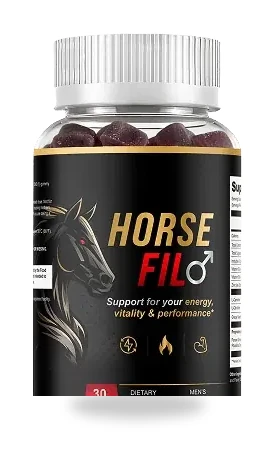
Fundamentals first, always. If the free levers are covered and you want to test one product properly, HorseFil is the formula this site covers: six named ingredients, one gummy a day, no stimulants and no hormone claim. The official store handles pricing, shipping and the satisfaction promise.
Get Offer See the ingredient list