Best Testosterone Booster 2026: An Evidence-First Buyer's Guide
The shelf is louder than ever and the data has barely moved. Here is how to pick the best testosterone booster in 2026 on clinically dosed ingredients, third-party testing and a transparent label — instead of the hype printed on the front.
Quick answer: what makes the best testosterone booster in 2026?
The best testosterone booster in 2026 is the one with clinically dosed, standardized ingredients printed in milligrams, third-party testing and no proprietary blend. Favour Tongkat Ali, ashwagandha, vitamin D and zinc at studied doses, skip tribulus, and expect the clearest results when you are correcting a genuine shortfall rather than topping up an already-normal man.
- Read the label, not the front: disclosed milligrams beat a blend every time, because a hidden amount cannot be matched to any trial.
- Prioritise four ingredients: Tongkat Ali 200–400mg, ashwagandha 300–600mg, vitamin D 3000–5000 IU, zinc ~30mg.
- Reset your expectations: boosters help most when they correct a shortfall; in healthy, replete men the honest expected value is small.

Most "best of" lists rank the marketing. This one ranks the label: standardized extracts, disclosed doses and testing you can verify come before any brand name.
Why "best" is the wrong question until you define it
Search the phrase and you will find a hundred lists, each crowning a different winner. That should tell you something before you spend a cent. When the same category produces a hundred incompatible “best testosterone booster” verdicts, the ranking is not measuring the product — it is measuring who paid for placement. The honest first move is to stop asking which bottle wins and start asking what a win would even look like.
A booster can only be “best” against a defined job. Are you trying to correct a documented vitamin D or zinc shortfall? Support training recovery and stress? Or genuinely raise testosterone in a man whose blood work is already normal? Those are three different problems, and the third one — the one the packaging always implies — is the one with the least support. Define the job first, and most of the shelf disqualifies itself on the spot.
What the research actually shows about OTC boosters
Here is the number that should anchor any 2026 shortlist. When a research team at USC Keck School of Medicine catalogued popular over-the-counter testosterone-boosting supplements, roughly 90 percent claimed to raise testosterone, while fewer than a quarter of the individual components had any published human data supporting that effect. A large share had no testosterone data at all. That is not a claim about one villainous brand; it is a description of the entire aisle you are shopping in.
Once you internalise that ratio, the buying process changes. You are no longer looking for the product that promises the most. You are looking for the rare product that is honest about what its ingredients can and cannot do, and that gives you the numbers to check. That is why a transparent label — not a bold headline — is the single most predictive quality marker in this category.
| Criterion | What good looks like | Why it matters | Red flag |
|---|---|---|---|
| Dose transparency | Every active printed in milligrams | Only disclosed amounts can be matched to a trial | “Proprietary blend” with a single total |
| Standardized extracts | e.g. Tongkat Ali standardized 100:1 | Standardization is what makes a dose reproducible | Vague “root powder” with no ratio |
| Evidence-backed actives | Tongkat Ali, ashwagandha, vitamin D, zinc | These have the strongest human data in-category | Tribulus as the headline ingredient |
| Third-party / GMP testing | GMP facility, batch testing available | Confirms identity, purity and label accuracy | No manufacturing or testing claims at all |
| Fair cost per dose | Roughly $30–$70 a month | Price should track milligrams, not marketing | Premium price on an underdosed blend |
| Honest claims | Support language, no disease promises | Legally and scientifically defensible | “Cures low T” or “replaces TRT” |
Work down that table and a pattern emerges: the qualities that predict a good product are all boring and checkable, while the qualities that sell products are all exciting and unverifiable. A serious buyer spends their attention on the boring column. If you want the deeper version of the first two rows, our companion guide on what a natural testosterone booster label should actually disclose walks the Supplement Facts panel line by line.
Prefer steadier stamina over a hormone gamble?
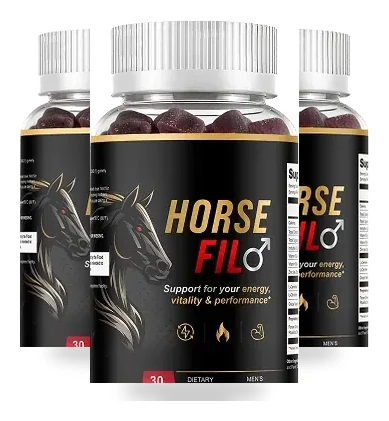
Plenty of men shopping for the best testosterone booster are really after steadier day-to-day stamina, not a lab number. HorseFil is a once-daily men's gummy built on L-citrulline and L-carnitine with ginseng, maca and rhodiola — no hormone claim, no autoship, and a satisfaction window long enough to run a proper twelve-week test.
Get OfferThe 2026 shortlist: ingredients that earn their place
If you strip the category down to actives with real human data behind them, the list is short. That is a good thing — it means you can memorise the whole shortlist and dose ranges before you ever open a store tab.
Tongkat Ali (Eurycoma longifolia), 200–400mg standardized. This is the most-studied botanical in the category, with several randomized controlled trials and a 2022 meta-analysis reporting significant testosterone increases, particularly in men with low baselines. A standardized 100:1 extract at 200–400mg for eight to twelve weeks is the range that keeps appearing in the trials. We break the human evidence and dosing down in detail in our guide to Tongkat Ali evidence and safe dosage.
Ashwagandha (Withania somnifera), 300–600mg. Best understood as a stress-and-recovery adaptogen with some testosterone signal in stressed or overweight men. Worth remembering: in at least one crossover trial a hormone marker rose while the outcomes the men would actually feel did not differ from placebo. Useful, but not magic.
Vitamin D, 3000–5000 IU — only if you are low. In a year-long controlled trial, deficient men supplemented with vitamin D showed a rise in total testosterone while placebo did not. That is a repletion result, not a booster result. If your level is already sufficient, another capsule is unlikely to do anything for your testosterone.
Zinc, ~30mg — again, repletion. Restricting dietary zinc lowers serum testosterone, and supplementing marginally deficient men raises it. Small studies, clear logic, and only relevant if you were short to begin with. More is not better; chronic high-dose zinc can suppress copper.

Not every men's-formula ingredient is a hormone story. Panax ginseng, maca and rhodiola sit in the energy-and-stamina lane, and keeping those categories separate makes any label far easier to read.
The red flags: proprietary blends, tribulus and hype
Just as useful as knowing what to buy is knowing what to walk past. Three red flags disqualify more products than anything else in 2026.
Proprietary blends. When a label lists six ingredients under one combined milligram total, you cannot tell whether the good actives are dosed to a trial level or sprinkled in for the label. Blends exist to hide underdosing. Treat a proprietary blend as an admission, not a feature.
Tribulus terrestris. It is one of the most common headline ingredients in the category and one of the least supported. A 2014 systematic review concluded that tribulus did not raise testosterone in men. It may have a role in libido perception for some, but as a testosterone lever it is marketing, not evidence.
Disease language. Any product that promises to “cure low T”, “replace TRT” or “fix hypogonadism” is making a claim a dietary supplement is not allowed to make and cannot support. Clinically low testosterone is a medical diagnosis. The right response to that language is to close the tab.
Standardization and disclosure are not fine print. They are the entire difference between a product you can evaluate and a product you have to trust on faith.
How much a quality booster should cost per month
Cost confuses people because both ends of the price range hide problems. A transparently dosed booster generally lands between $30 and $70 a month, and within that band price mostly tracks the dose and the extract quality rather than the label on the front. Ultra-cheap products usually protect their margin by underdosing the expensive actives — a clinical dose of standardized Tongkat Ali simply costs money to put in a capsule. At the other end, a premium price is not evidence of a premium formula; plenty of expensive bottles are paying for advertising, not milligrams.
The move that cuts through it is to divide the monthly price by the disclosed milligrams of the actives you actually care about. Two bottles at the same price can differ threefold once you do that arithmetic. If a product hides the amounts behind a blend, you cannot run the calculation at all — which is itself the answer. For a full worked example, see our breakdown of how testosterone booster cost per month really breaks down.
Where HorseFil fits — honestly
We cover HorseFil, so let us be straight about it rather than crown it. HorseFil is a stamina and endurance formula, not a testosterone product. It is a once-daily gummy built on L-citrulline and L-carnitine with three adaptogenic botanicals — ginseng, maca and rhodiola — and it makes no hormonal claim on the label. It ticks several buyer-guide boxes: a GMP-aligned, made-in-USA manufacturing story, a once-daily format with no autoship, and a money-back window long enough to test properly. It does not publish per-ingredient milligrams, so by our own transparency rule, dose adequacy is unknown until you read the Supplement Facts panel on the bottle.
So HorseFil is not our pick for a man whose defined job is “raise a low testosterone number.” It is a reasonable option for a man whose real goal is steadier stamina and who wants a clean, once-daily formula to test against a written plan. Matching the product to the job is the whole point of this guide, and it is the only way to avoid buying the wrong thing well.
Where HorseFil sits. HorseFil is a stamina and endurance formula rather than a testosterone product — a once-daily gummy on L-citrulline and L-carnitine with three adaptogenic botanicals, and no hormonal claim. It does not publish per-ingredient amounts, so dose adequacy is unknown until you read the Supplement Facts panel. This article is general information, not medical advice. Adult men only; speak to a healthcare professional before starting any supplement, particularly if you take prescription medication.
Related reading
Frequently asked questions
What makes a testosterone booster the best in 2026?
The best testosterone booster in 2026 is judged on transparency and evidence, not marketing. Look for standardized extracts with the milligrams printed on the label, doses that match published trials, third-party or GMP testing, and no proprietary blends hiding the amounts. A product that names ingredients without amounts cannot be compared with any trial by anyone, so a transparent label is the first filter.
Do any testosterone boosters actually raise testosterone?
Some ingredients have moved measured testosterone in controlled trials, but usually in men who were deficient or had low baselines. When researchers at USC Keck examined popular over-the-counter boosters, roughly 90 percent claimed to raise testosterone while fewer than a quarter had supporting data. Correcting a genuine shortfall is the clearest signal; adding more for a man who is already normal rarely does much.
Which ingredients should a top booster contain?
The best-supported options are Tongkat Ali at 200 to 400mg of a standardized extract, ashwagandha at 300 to 600mg, vitamin D at 3000 to 5000 IU when you are genuinely low, and zinc at around 30mg. Tribulus is popular but a 2014 review found it did not raise testosterone, so it belongs to marketing rather than evidence. Prefer disclosed milligrams over a blend.
How much should a quality booster cost per month?
A transparently dosed testosterone booster usually costs somewhere between 30 and 70 dollars a month, and price tracks the dose and extract quality more than the brand. Very cheap products tend to underdose to protect their margin; very expensive ones are often paying for marketing. Judge the cost against the milligrams actually delivered, not the size of the bottle.
Where to check this
- Clemesha C.G., Thaker H., Samplaski M.K. (USC Keck) — analysis of “testosterone boosting” supplement composition and claims, World J Mens Health (via PubMed)
- Examine.com — Eurycoma longifolia (Tongkat Ali): human trials and dosing summary
- Systematic review of Tribulus terrestris and testosterone, 2014 (via PubMed)
- NIH Office of Dietary Supplements — Vitamin D, Health Professional Fact Sheet
- Harvard Health Publishing — Testosterone: what it does and doesn't do
We link to primary records and standing evidence summaries so you can check the current position yourself rather than take ours on trust.
Test one clean formula, properly
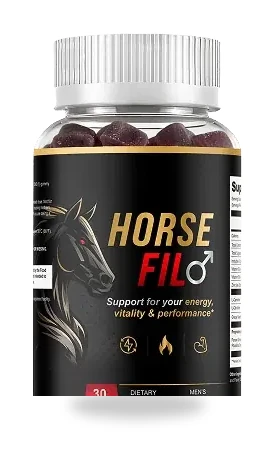
If your defined job is steadier stamina rather than a hormone number, HorseFil is the formula this site covers: six named ingredients, one gummy a day, no stimulants and no hormone claim. The official store handles pricing, shipping and the satisfaction promise.
Get Offer See the ingredient list