What Is Testosterone Booster Used For? Energy, Gym or Libido First
Three goals get sold as one product. They run on different mechanisms, over different timescales, with very different evidence behind them - so pick one before you spend anything.
Quick answer: the three goals people mean
Testosterone boosters are used for three quite different things: everyday energy, gym output, and libido or sexual function. They are not interchangeable goals, they run on different mechanisms and different timescales, and the evidence behind them is uneven — strongest where a man was short of something to begin with, weakest in healthy men whose levels are already normal. Choosing one goal before you buy is the difference between a test you can read and eight weeks of vague impressions.
- Energy: the most commonly claimed use and the hardest to measure. Sleep, load and body composition move it far more than any capsule.
- Gym output: the most measurable goal, because reps, loads and times are numbers you already record.
- Libido: the most emotionally loaded and the one where a persistent problem most deserves a clinician rather than a shelf.
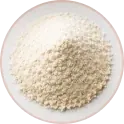
Mechanism decides timescale. L-carnitine works on fatty-acid transport, and muscle carnitine stores shift slowly — which is why a carnitine-based product judged after ten days has not been judged at all.
Start by naming one outcome
Asking what is testosterone booster used for is really three questions wearing one coat, and the answer changes depending on which of the three you actually care about. So start there. The most useful thing anyone can do before buying in this category costs nothing: write down, in one sentence, what would have to change for you to call it a success. Not “feel better”. Something you could put a number or a date on. Two more sets on your third exercise. Getting through the afternoon without a coffee at three. Sleeping through instead of waking at four.
The reason is not motivational. It is that the three goals people have in mind require different ingredients, different timescales and different evidence, and a product optimised for one of them is usually mediocre at the others. Trying to judge all three at once produces the outcome most men actually get: eight weeks, no clear conclusion, a repeat purchase made out of inertia.
It also protects you from the category's structural weakness. When researchers catalogued the ingredients on fifty best-selling testosterone-boosting supplements, the great majority of those ingredients had no published data on testosterone at all. A product cannot be judged against its marketing, only against a goal you set yourself.
What is testosterone booster used for, goal by goal
Here are the three uses side by side, with the mechanism each depends on, how long it honestly takes to judge, and how strong the underlying evidence is.
| Goal | Mechanism it depends on | Honest time to judge | Evidence strength | What counts as a result |
|---|---|---|---|---|
| Everyday energy | Adaptogenic botanicals acting on fatigue and stress load; fatty-acid transport for fuel use | 6–12 weeks | Moderate for rhodiola on fatigue; weak for most other ingredients sold for this | Fewer afternoon crashes across a fortnight, logged rather than remembered |
| Gym output | Nitric-oxide support and blood flow; recovery between sets and sessions | 4–8 weeks | Moderate for nitric-oxide precursors on work capacity; weak for hormonal claims in healthy men | A measured change in reps, load or session quality at the same bodyweight and sleep |
| Libido and sexual function | Mostly vascular and psychological; hormonal only where levels are genuinely low | 8–12 weeks | Weak to mixed; the clearest signals are in men who were low to begin with | An honest change in interest and confidence — and a doctor's visit if nothing changes |
| Correcting a shortfall | Repletion of a nutrient you were actually low in | 8–12 weeks after a blood test | Strongest evidence in the whole category, and the least marketed | A repeat blood test, not a feeling |
The fourth row is the one nobody sells. The most reliable results in this literature come from correcting a real deficiency — vitamin D in men who were low, zinc in men who were marginal. That is repletion evidence. It says something true and useful, and it says nothing whatsoever about a man whose levels are already normal.
If your goal is endurance rather than hormones
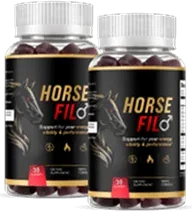
A lot of men who set out to buy testosterone booster products are chasing the energy and gym rows of that table, not the hormonal one. HorseFil is built for exactly that: L-citrulline and L-carnitine with ginseng, maca and rhodiola, one gummy a day, no stimulants and no hormone claim. Pricing, shipping and the satisfaction promise are handled by the official store.
Get OfferGoal one: everyday energy
This is the most commonly claimed use and the least tractable. “Energy” in supplement marketing is a feeling, and feelings move with sleep, hydration, blood sugar, workload and mood far more than with anything in a capsule. Before attributing an afternoon slump to a hormone, it is worth being honest that six hours of sleep and a carbohydrate-heavy lunch explain most of them.
Where does a supplement plausibly fit? Two places. Adaptogenic botanicals — rhodiola has the most credible fatigue literature of the common ones — are studied for how people cope with sustained load rather than for an acute lift. And fatty-acid transport, the job L-carnitine does, is a fuel-use mechanism that shifts over weeks to months if it shifts at all.
Neither is a stimulant, and that is the point. A product with no caffeine in it will never feel like anything on day one. If you want the sensation of energy in twenty minutes, coffee already does that and does it cheaply. The question people asking what is testosterone booster used for should be asking instead is whether their baseline is higher after six weeks — a completely different measurement, and one that requires writing things down.
Goal two: gym output
This is the easiest goal to test honestly, because you are already generating the data. Reps at a given load, total session volume, how the second half of a session feels compared with the first, how you feel forty-eight hours later. If you keep a training log, you have a measuring instrument better than anything in the trials.
The mechanism with the clearest performance literature here is nitric-oxide support, which is why citrulline shows up in serious formulas rather than arginine — the two are not interchangeable, and the reason is a first-pass problem in the gut and liver that we cover in our piece on citrulline versus arginine. That mechanism is about blood flow and work capacity, not about hormones, and it is honest to keep those separate.
Three rules make a gym test readable. Do not change your programme in the same month. Do not change your bodyweight materially. And accept that sleep is a bigger variable than the supplement — a bad fortnight of sleep will bury any effect a capsule could produce, and you will blame the capsule.
Goal three: libido and sexual function
This is the goal that sells the category and the one where the honest answer is least comfortable. Libido is driven by a mixture of vascular function, psychology, relationship context, sleep, alcohol, medication and mood. Testosterone is one input among many, and in men whose levels are normal it is rarely the limiting one.
Erectile dysfunction is frequently the first visible sign of vascular disease. Treating it with a supplement does not just fail to help — it can mean missing a warning that would have been worth acting on years earlier.
So the rule here is different from the other two goals. A short dip in interest during a stressful quarter is ordinary. A persistent change — several months, no obvious cause, or accompanied by fatigue, mood change or loss of morning erections — is a reason to see a doctor and get assessed, not a reason to try a different bottle. No dietary supplement is a treatment for erectile dysfunction or for clinically low testosterone, and anything sold as though it were should be treated with suspicion.
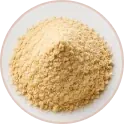
Maca is the ingredient most often added for the libido column. It is traditionally used and widely included; the human evidence for it as an endurance or libido ingredient is among the weakest of the botanicals in this category, and we would rather say so.
Why one goal changes what you buy
Once the goal is fixed, the label reads differently. If your goal is gym output, the ingredient that matters is the nitric-oxide precursor and the number that matters is how much of it there is. If your goal is everyday energy, the adaptogen and its standardisation matter more, and the timescale you have to commit to is longer. If your goal is libido and you are over forty with other symptoms, the correct purchase is a blood test, not a bottle.
This is also where most products in the category fail you. A formula that names six ingredients and publishes no amounts cannot be matched to any goal, because dose adequacy is unknowable from the outside. That is not a scandal — proprietary blends are legal and common — but it does mean the only document that answers the question is the Supplement Facts panel on the physical bottle. Read it before you decide whether it fits the goal you wrote down.
None of which is a reason to avoid the category entirely. It is a reason to answer what is testosterone booster used for with your own single sentence rather than the manufacturer's three. People asking is it worth taking testosterone boosters are usually asking two questions at once: whether the category works, and whether it works for them. The first has a broadly discouraging answer for healthy men. The second is answerable only by a goal, a timescale and a stop date.
What this cannot do
- It cannot raise a normal hormone level in a way you would notice. The clearest signals in this literature come from men who were deficient or depleted; the healthy, replete man is the one least likely to feel anything.
- It cannot substitute for sleep, load management or body composition. These move the outcomes people attribute to testosterone more than any supplement in the category.
- It cannot treat a condition. Clinically low testosterone and erectile dysfunction are medical diagnoses. A dietary supplement is not a treatment for either and is not intended to diagnose, treat, cure or prevent any disease.
- It cannot be judged in ten days. Almost every trial in this category ran between four and twelve weeks. Anything you notice in the first fortnight is far more likely to be novelty, expectation or an unrelated good week.
- It cannot be evaluated from a label with no amounts. Evidence attaches to ingredients at studied intakes, not to ingredient names.
An eight-week protocol you can actually follow
One goal, one product, eight weeks, three lines a day. That is the whole protocol, and it is more rigorous than most of what gets published about this category.
Week zero. Write the goal and the number that would prove it. Take a baseline: a week of sleep hours, a week of training logs, or an honest note on the libido question. Check for interactions with any medication you take.
Weeks one to two. Take the label serving, at the same time each day, with food. Expect nothing. This is the tolerability window, not the effect window. People asking how long does it take for testosterone boosters to kick in are usually disappointed here, and that disappointment is not informative.
Weeks three to eight. Keep the rest of your life as stable as you reasonably can. Do not add a second supplement. Log three lines a day: sleep, the goal metric, and anything odd.
Week eight. Compare the log to week zero, not to your memory. If the goal metric moved, keep going and re-check at week sixteen. If it did not, stop — and treat that as a successful experiment rather than wasted money, because you now know something you did not know before.
Where HorseFil fits. HorseFil is an endurance and stamina formula, not a testosterone product: two amino acids and three adaptogens, one gummy a day, with no hormonal claim on the label. It does not publish per-ingredient amounts, so we cannot tell you whether any single ingredient is at a level the research would recognise, and nor can anyone else writing about it. This article is general information, not medical advice. Adult men only.
Frequently asked questions
What is a testosterone booster actually used for?
In practice it is used for three different things: everyday energy, gym output, and libido or sexual function. They are not the same goal. Energy claims lean on adaptogenic botanicals and fuel metabolism over six to twelve weeks, gym claims lean on blood flow and work capacity over four to eight weeks, and libido is driven mostly by vascular and psychological factors rather than hormones in men whose levels are already normal.
Which goal has the best evidence behind it?
Correcting a genuine shortfall has the strongest evidence and is the least marketed. Trials in men who were low in vitamin D or marginal in zinc show measurable change after repletion. Among the performance goals, gym output has the more credible mechanism because nitric-oxide support and work capacity are measurable, while everyday energy is the hardest to test because it is a feeling that moves with sleep, food and workload.
How long should I give a testosterone booster before deciding?
Eight to twelve weeks, with the first two weeks treated as a tolerability window rather than an effect window. Almost every human trial of these ingredients ran between four and twelve weeks, so judging a product after ten days measures novelty and expectation rather than the intervention. Set a stop date before you start and compare a written log against your week-zero baseline, not against memory.
Can a testosterone booster help with erectile dysfunction?
No. Erectile dysfunction is a medical condition that needs assessment, and it is frequently the first visible sign of vascular disease, so treating it with a supplement risks missing a warning worth acting on. Dietary supplements are not intended to diagnose, treat, cure or prevent any disease. Persistent changes in sexual function, especially alongside fatigue or mood changes, should be discussed with a doctor.
Where to check this
- NIH Office of Dietary Supplements — Dietary Supplements for Exercise and Athletic Performance, Health Professional Fact Sheet (ods.od.nih.gov)
- Lopresti A.L., Drummond P.D., Smith S.J. — A randomised, double-blind, placebo-controlled crossover study examining the hormonal and vitality effects of ashwagandha in aging, overweight males. Am J Mens Health 2019;13(2) (PMID 30854916)
- National Center for Complementary and Integrative Health, NIH — Rhodiola (nccih.nih.gov)
- Mayo Clinic — Erectile dysfunction: symptoms and causes (mayoclinic.org)
- Harvard Health Publishing, Harvard Medical School — Testosterone: what it does and doesn't do (health.harvard.edu)
We link to primary records and to the standing evidence summaries maintained by public health bodies, so you can check the current position yourself rather than take ours on trust.
One goal, one gummy, eight weeks
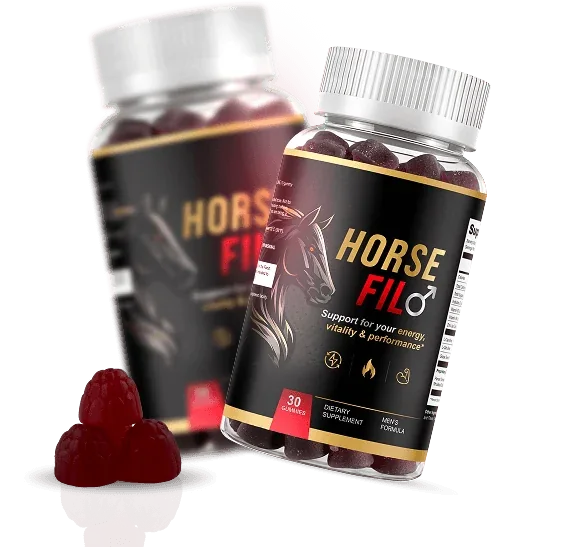
If the goal you wrote down was endurance rather than hormones, HorseFil is the formula this site covers: six named ingredients, one gummy a day, no autoship and a satisfaction window long enough to actually run the test above.
Get Offer See current prices