Blood Sugar Supplements for Prediabetes: The Research So Far
This is the most crowded shelf in the supplement aisle and one of the thinnest evidence bases on it. Here is an honest map of what has been studied, how well, and where the gaps are.
Short answer
The research on blood sugar supplements for prediabetes is real but weak: mostly small trials, mostly short, using extracts that differ from brand to brand, with results that scatter rather than converge. Nothing in this category is approved to treat or prevent any condition, and the intervention with the strongest evidence by a wide margin is still structured change to diet and physical activity. A supplement is at best an addition to that, never a substitute for it, and the pharmacist conversation about interactions matters more than the ingredient comparison.
- Best evidence in this whole space: structured lifestyle change, studied for decades in large trials.
- Most-studied single ingredient: berberine, with promising but small and short trials and poor absorption.
- Biggest practical problem: two bottles of the same herb are often not the same product.
Type "prediabetes" into any search box and within three results you will be offered a capsule. The category is enormous, the marketing is confident, and the underlying literature is a great deal more hesitant than the packaging suggests.
This piece is our attempt to describe that literature fairly rather than to sell out of it. Some ingredients here have genuinely interesting data behind them. None of them have data that would justify the word "solution", and we will say so as we go.
What prediabetes actually is
Prediabetes is a label applied when glucose markers sit above the usual range but below the threshold used for a diabetes diagnosis. It is defined by numbers — a fasting glucose measurement, an HbA1c value, or the result of a glucose tolerance test — and the specific cut-offs are set by clinical bodies and occasionally revised.
Two things follow from that definition and both matter here. First, it is a diagnosis, made by a clinician from repeat testing, not something you conclude from a home device or a supplement website. Second, because it is defined by a number rather than by symptoms, most people carry it without noticing anything, which is precisely why the category sells so well: a label, no felt symptoms, and a strong wish to act.
It is also not a fixed destiny. Trajectories vary considerably between individuals, and the factors that influence them are the ordinary ones — body composition, activity, dietary pattern, sleep, medication, genetics and age. Where a supplement fits into that list is the question this article is about, and the honest answer is: near the bottom.
The benchmark every supplement is quietly measured against
Any claim in this space has to be read against what the well-conducted research already established using no supplement at all. The large, NIH-funded prevention research conducted in the United States tested structured lifestyle change — a defined programme of dietary change and regular physical activity with real coaching support — against both a medication arm and a placebo arm, in thousands of participants followed for years.
The specific numbers belong in the primary sources rather than in a paraphrase, and we have linked the NIH page for that research at the foot of this article so you can read the actual findings. What is relevant here is the shape of the result: the lifestyle arm performed strongly, the trial was large, and it ran for years rather than weeks.
Now compare that to a typical supplement trial in the same area: several dozen participants, eight to twelve weeks, one extract at one dose, an outcome measured as a change in a laboratory marker rather than in what actually happened to people. Both are called evidence. They are not the same weight of evidence, and nothing in the second column has yet earned the right to be discussed in the same breath as the first.
The comparison group for every capsule in this category is not a placebo. It is a walking programme and a better breakfast, and that comparison has decades of data behind it.
Here for energy rather than glucose numbers?
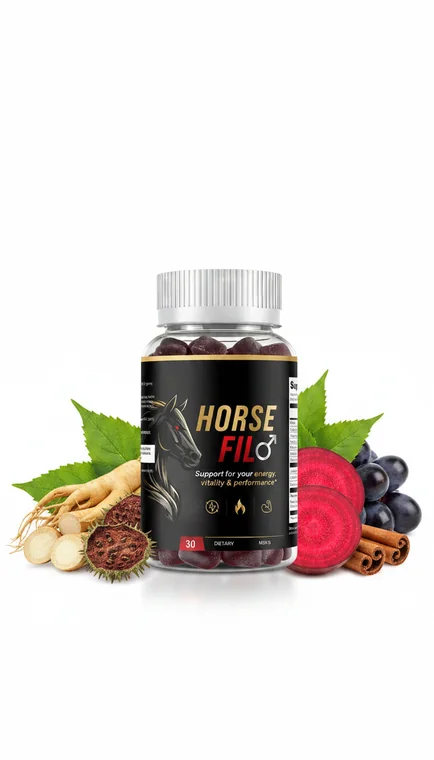
Many people who arrive comparing the best blood sugar support supplement are really after steadier energy and stamina through the day. That is a different product category, and HorseFil sits in it. See the current offer and the full ingredient list on the official store.
Where each ingredient's evidence actually sits
The table below covers the ingredients that dominate this shelf. "Evidence strength" here is a qualitative judgement about the volume and quality of human trials, not a score, and reasonable people grade some of these differently.
| Ingredient | Proposed mechanism | State of the human evidence | Main limitation |
|---|---|---|---|
| Structured lifestyle change | Improved insulin sensitivity, body composition, muscle glucose uptake | Strongest in the field; large trials over years | Requires sustained behaviour change and support |
| Viscous soluble fibre | Slows carbohydrate absorption; forms a gel in the small intestine | Reasonably consistent for post-meal response | Needs gram-level doses; will not fit in a pill |
| Berberine | Activates AMPK; acts on intestinal glucose handling | The most-studied botanical here, but trials are small and short | Poor oral absorption; real interaction potential |
| Chromium | Cofactor involvement in insulin signalling | Weak in people who are not deficient | Widely included because it is cheap and tiny |
| Cinnamon | Slowed gastric emptying and insulin signalling effects | Inconsistent; results scatter across trials | Species and extract differ hugely between products |
| Alpha-lipoic acid | Antioxidant activity and glucose uptake signalling | Some support, mostly for nerve-related endpoints rather than glucose | Studied mostly at doses above typical retail products |
| Magnesium | Cofactor in insulin signalling pathways | Clearer benefit where intake is genuinely low | Corrects a shortfall rather than adding an effect |
| Panax ginseng | Ginsenoside effects on glucose handling | Small trials, promising signals, poor standardisation | Extracts are not comparable brand to brand |
Reading the last column top to bottom gives the fairest summary of the category. The evidence is not absent. It is fragmented, and it is fragmented in ways that mean a positive trial of one extract at one dose rarely transfers to the bottle in your hand.
Why so many of these trials are small and short
It is worth understanding why the literature looks like this, because the reason is structural rather than sinister.
Supplements cannot be patented in the way a drug molecule can, so there is no mechanism to recover the cost of a large, multi-year trial through exclusivity. A manufacturer that spends heavily to prove an ingredient works has just funded the marketing for every competitor selling the same ingredient. The rational commercial move is a small study sufficient to generate a citation, and that is very often what gets funded.
Add publication patterns that favour positive findings, outcome measures chosen after the data comes in, and a strong tendency to test in people whose starting numbers are well outside the usual range — where any effect will look largest — and you get exactly the literature we have: lots of small positive-looking studies that do not add up to a confident conclusion when pooled.
The standardisation problem nobody mentions on the label
This is the issue that quietly undermines most ingredient comparisons, including ours.
A botanical extract is not a defined chemical. It is whatever came out of a particular plant part, grown in a particular place, extracted with a particular solvent, at a particular concentration. Two bottles both saying "cinnamon extract" can differ in species, in the concentration of the compounds being credited with the effect, and in what else came along for the ride. The same is true of ginseng, where ginsenoside content varies with plant age and processing, and of most other botanicals here.
The consequence is direct. When a trial reports a result for a specific standardised extract at a specific dose, that result belongs to that extract at that dose. A different product containing the same plant name has not inherited the finding. Labels that specify a standardisation — a named compound at a stated percentage — at least allow the comparison. Labels that print a proprietary blend do not, and that is most of them.
The same reasoning applies to combined products. Our comparison of dual-target glucose and cholesterol formulas goes through the arithmetic of what can physically fit in one serving, which is the other half of this problem.
Safety and interactions matter more here than efficacy
In most supplement categories the risk conversation is a formality. In this one it is the main event, because the people buying are disproportionately likely to be taking prescription medication.
Several popular ingredients in this space have plausible pharmacological interactions, including with medicines used for glucose, for blood pressure and for clotting. Berberine in particular affects enzymes involved in processing many prescription drugs, which means the interaction question extends well beyond the medicines you would expect. Red yeast rice, sold for lipids rather than glucose but frequently stacked alongside, contains a compound chemically equivalent to a statin drug, which is a genuine reason for medical oversight rather than a marketing caveat.
The practical advice is unglamorous and free: take the actual bottle to a pharmacist and ask. They will read the full ingredient list rather than the product name, they see interaction problems weekly, and the consultation costs nothing. If you are pregnant, breastfeeding, scheduled for surgery, or living with kidney or liver conditions, that conversation is not optional.
What blood sugar supplements for prediabetes cannot do
Stating the limits plainly, because most pages in this category will not.
They cannot treat, cure, prevent or reverse prediabetes or any other condition. That is not a cautious phrasing choice, it is the regulatory position: dietary supplements are not drugs, these statements have not been evaluated by the Food and Drug Administration, and no product in this category is approved for any disease outcome. Any page telling you otherwise is telling you something the evidence does not support and the law does not permit.
They cannot replace measurement or medical care. A capsule does not know your HbA1c, does not see your medication list and cannot tell you whether anything changed. That requires blood work before and after, interpreted by someone qualified. If you want to know which markers respond and how quickly, we cover that in which blood sugar markers actually move, and the pitfalls of tracking with a wearable sensor in what CGM data reveals.
And they cannot outrun the basics. No ingredient in the table above is competing with structured lifestyle change; at most it is being tested as an addition to it. Any framing that positions a capsule as an alternative to the diet-and-activity work has the hierarchy backwards.
A sensible order of operations
If you have been told your numbers are drifting, the sequence that respects the evidence looks like this.
- Confirm the numbers with a clinician. One reading is not a diagnosis, and the plan depends on which marker is off and by how much.
- Do the two things with the best data. Regular physical activity, including something as ordinary as walking after meals, and a dietary pattern with more fibre and fewer refined carbohydrates. Nothing in a bottle outperforms this pair.
- Fix any genuine shortfall. If your magnesium or vitamin D intake is genuinely low, correcting that is worth more than adding an exotic extract on top of an adequate diet.
- Only then consider an addition, one at a time, with a printed dose on the label, cleared by a pharmacist against your medication list.
- Re-test at a sensible interval and be willing to conclude that it did nothing. Most of the value in this whole exercise comes from being prepared to stop.
A closing note on what this site sells, since search intent in this niche overlaps constantly. HorseFil is a men's energy and stamina gummy built around L-citrulline, L-carnitine, panax ginseng, maca root and rhodiola. It is not a glucose product, it has not been trialled against the markers discussed on this page, and it has no place in a list of the best natural blood sugar supplement options. We earn a commission when people buy it, which is exactly why we would rather be clear about what it is not. If glucose is your concern, the clinician comes first. If energy and endurance are the goal, that is the conversation HorseFil belongs in.
Frequently asked questions
Is there a supplement proven to reverse prediabetes?
No. No dietary supplement is approved to diagnose, treat, cure or prevent any disease, and that includes prediabetes and type 2 diabetes. The interventions with the strongest published support in this space are structured changes to diet and physical activity, and any decision about a diagnosed condition belongs with your clinician.
Why do supplement trials in this area disagree with each other so often?
Mostly because they are not testing the same thing. Different trials use different plant extracts, different standardisation, different doses and different durations, in groups that often number a few dozen people. Small, short and varied studies produce scattered results, which is why pooled analyses in this field usually report wide uncertainty.
Which single change has the best evidence behind it?
Structured lifestyle change combining dietary change with regular physical activity has by far the strongest and longest-running evidence base of anything discussed here, including the large NIH-funded prevention research. It is unglamorous, it is free, and no capsule in this category has produced results of that quality or that duration.
What should I ask a pharmacist before adding one of these to my routine?
Ask whether the specific ingredient interacts with any medicine you already take, particularly anything for glucose, blood pressure or clotting, and whether it affects the liver enzymes that process your other prescriptions. Bring the actual bottle so they can read the full ingredient list rather than working from the product name.
Where to check this yourself
- NIDDK, National Institutes of Health — the Diabetes Prevention Program research
- NIDDK — prediabetes and insulin resistance explained
- Mayo Clinic — prediabetes, causes and risk factors
- National Center for Complementary and Integrative Health — supplements and blood glucose
- PubMed — run the prediabetes supplement trial search yourself
We link to standing reference resources and to a live literature search rather than to a snapshot of individual results, so you can check the current position instead of trusting a summary that ages.