Best Supplement for Blood Sugar and Cholesterol: One Formula or Two?
Combined metabolic formulas promise to handle glucose and lipids in a single serving. Whether that is a convenience or a compromise depends entirely on how much room is left in the capsule.
Short answer
For most people, two focused products beat one dual-target formula, because the ingredients with the strongest evidence on each side are bulky and a single serving rarely holds a research-sized amount of both. A combined product is only worth it when its label prints milligram amounts that match the doses used in trials for both targets. If the label hides behind a proprietary blend, you cannot make that comparison at all, and neither can anyone else.
- One formula wins on adherence. The supplement you actually take every day beats the theoretically superior one you forget.
- Two products win on dosing. You can set each ingredient at the amount its own research used, and drop the one that is not doing anything.
- Neither wins on disease. No supplement is approved to treat or prevent a metabolic condition, and none of this replaces a conversation with your clinician.
Search for the best supplement for blood sugar and cholesterol and the results split into two camps almost immediately. One camp sells a single bottle with a long ingredient list and a name containing the word "metabolic". The other sells you two bottles: something glucose-facing and something lipid-facing, each with a shorter list. Both camps sound reasonable. Both cannot be right.
The honest answer is that this is not really a question about ingredients. It is a question about physical space, and about what a manufacturer had to leave out to fit everything on one label.
What a dual-target label is actually claiming
A combined metabolic formula makes an implicit promise that is worth stating out loud: that this serving contains enough of ingredient A to matter for glucose, and enough of ingredient B to matter for cholesterol, at the same time, in the same swallow. Not a trace of each. Enough.
That promise runs straight into arithmetic. A capsule holds somewhere in the region of five to eight hundred milligrams of powder. A gummy holds far less active material than that, because most of its weight is the base — sugar or a sugar alcohol, pectin or gelatin, colour and flavour. Meanwhile the two ingredients with the most consistent published support in this space, soluble fibre and plant sterols, are dosed in grams per day, not milligrams. Psyllium studies routinely work in the region of seven to fifteen grams daily. Sterol and stanol work clusters around roughly two grams a day taken with meals.
You cannot put fifteen grams of psyllium in a capsule. You cannot put two grams of sterols in a gummy alongside anything else and still have a gummy. So dual-target formulas are pushed toward the ingredients that are small enough to fit — chromium, cinnamon extract, small berberine doses, alpha-lipoic acid — which happens to be the group with the thinnest evidence, not the thickest. That is not a conspiracy. It is a packaging constraint doing your ingredient selection for you.
The genuine case for one combined formula
None of the above means combined products are pointless. There are three real arguments in their favour, and the first one is the strongest.
Adherence. Compliance decays with every extra bottle, every extra time of day, and every extra decision. A person who takes one gummy with breakfast for nine months has run a longer and more meaningful trial on themselves than a person who assembles a four-bottle stack and abandons it in week five. In real life, the difference between a perfect protocol and a completed one is usually decided in favour of the completed one.
Cost structure. Buying one product is generally cheaper per day than buying two, and shipping consolidates. We do not publish prices here because the offers change constantly, but the direction is not in dispute.
Shared upstream biology. Glucose handling and lipid handling are not separate machines. Both run partly through insulin signalling, hepatic fat handling and the same broad set of lifestyle inputs. An ingredient that genuinely improves insulin sensitivity has a plausible reason to show up on a lipid panel as well. Plausible is not proven, but it is not nothing either.

The genuine case for two separate products
The counter-argument is simpler and, for anyone willing to take two bottles, usually stronger.
With two products you can dose each ingredient at the amount its own research used, rather than at the amount that happened to fit. You can also take them at the times their mechanisms suggest — fibre and sterols with the meal they are meant to act on, an adaptogen in the morning — instead of compromising on one timing for everything. And crucially, you can subtract. If you stop one product and nothing on your next panel changes, you have learned something. Stop a nine-ingredient combined formula and you have learned nothing at all about which of the nine mattered.
Two products also fail more gracefully. If one causes digestive upset, you drop it and keep the other. A combined formula is all or nothing.
Looking at a men's formula rather than a metabolic one?
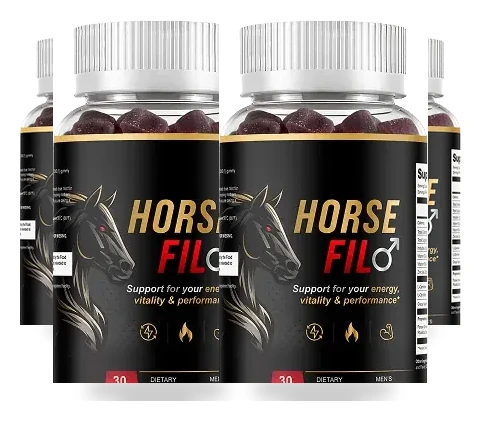
People searching for the best blood sugar support supplement often end up wanting something quite different: energy, stamina and circulation support rather than glucose management. HorseFil sits in that second category. See the current offer and the full ingredient list on the official store.
Side by side: dose, form and evidence strength
The table below is the version of this comparison we would want if we were buying. It lists the ingredients that dominate this category, what each is actually aimed at, the amounts that appear in published human work, and an honest word on how solid that work is.
| Ingredient | Mainly aimed at | Amounts used in human studies | Evidence strength | Practical catch |
|---|---|---|---|---|
| Soluble fibre (psyllium, beta-glucan) | Both | Grams per day, commonly split across meals | Reasonably consistent for LDL; more modest for post-meal glucose | Far too bulky for a capsule or gummy. Needs a powder or the food itself. |
| Plant sterols and stanols | Cholesterol | Around two grams daily, with food | Well characterised and repeatedly studied | Needs to be taken with a meal containing fat to do anything. |
| Berberine | Glucose, with a secondary lipid signal | Typically several hundred milligrams, two to three times daily | Promising but mostly small, short trials; poor oral absorption | Real interaction potential with prescription medicines. Ask a pharmacist first. |
| Cinnamon extract | Glucose | From under a gram to several grams of powder daily | Weak and inconsistent across trials | Cassia cinnamon carries coumarin; extract type varies by brand. |
| Chromium | Glucose | Micrograms, not milligrams | Weak in people who are not deficient | Fits easily in any pill, which is precisely why it is everywhere. |
| Red yeast rice | Cholesterol | Varies enormously by product | Its active compound is chemically the same as a statin drug | Content is inconsistent between batches. This one genuinely needs medical oversight. |
| Marine omega-3 (EPA/DHA) | Triglycerides | Grams per day in the trials people cite | Reasonable for triglycerides, not for LDL | The dose used in studies is several times a typical retail softgel. |
Read down the "practical catch" column and a pattern appears. The ingredients that fit neatly into a combined pill are the ones with the weakest support. The ones with the strongest support are the ones that will not fit. That single observation explains most of what is wrong with the dual-target category.
Where the overlap is real and where it is marketing
There is one genuinely dual mechanism worth understanding, because it explains why fibre keeps appearing in both columns. Viscous soluble fibre forms a gel in the small intestine. That gel slows the rate at which glucose is absorbed, which blunts the post-meal spike rather than the fasting number, and it also binds bile acids, prompting the liver to pull cholesterol out of circulation to make more of them. One physical property, two outcomes. That is a real dual mechanism, and it is almost the only one in the category with a clean story behind it.
Most other dual claims are additive rather than mechanistic: the formula contains one glucose ingredient and one lipid ingredient, and the marketing describes the bottle rather than the biology. Nothing dishonest about that in principle, but it does mean the product is only as good as its two weakest doses.
A combined formula has to fit two full research doses into one serving. Most of them fit neither, then print a proprietary blend so that nobody can check.
What neither option can do
This is the section that most pages in this category leave out, so we will be direct about it.
No dietary supplement — combined or separate — is approved to diagnose, treat, cure or prevent any disease, including any condition involving blood glucose or blood lipids. Statements about these products have not been evaluated by the Food and Drug Administration. Where a trial exists, the effects reported are generally modest, measured over weeks in small groups, and often in people whose starting numbers were already outside the usual range, which limits how far the finding travels to someone whose numbers are fine.
Supplements also cannot see your medication list. Several popular ingredients in this space have plausible interactions with prescription drugs used for glucose, blood pressure and clotting, and the combination question is not theoretical. If you take anything on prescription, the pharmacist counter is a free consultation and the single highest-value step in this whole process.
And they cannot substitute for measurement. Any claim about what a product did for you is a claim about numbers, so you need numbers — a lipid panel and glucose markers before starting and again after a sensible interval. Without those, you are guessing, and the guess will flatter whichever product you spent money on. If you are new to the markers themselves, our note on which blood sugar markers actually move, and how fast covers what to ask for and how long each one takes to respond.
How to choose the best supplement for blood sugar and cholesterol
A short decision path that respects both the evidence and your patience:
- Fix the food first. Fibre from food, less refined carbohydrate at the meals that spike you, and regular walking after eating outperform anything discussed above, cost nothing, and are the comparison every supplement is quietly measured against.
- If you will only take one thing, take fibre. It is the one ingredient in this category that genuinely acts on both targets, and it is sold as a cheap powder rather than as a premium blend.
- If you buy a combined formula anyway, buy one that prints doses. A visible milligram amount next to every active ingredient is the minimum. A proprietary blend means the comparison in the table above is impossible to run.
- Change one thing at a time. Starting two products in the same week means a changed panel tells you nothing about either.
- Give it a real interval. Lipid panels and longer-window glucose markers respond over months, not days. Judging in week two is judging noise.
One last note on category confusion, because it comes up constantly in this niche. A great many people who start out comparing top blood sugar support supplements are not really chasing a glucose number at all. They are chasing the thing they think the number is costing them: energy through the afternoon, stamina, drive. Those are different products with different ingredient lists. HorseFil is one of the second kind — a men's energy and stamina gummy built around L-citrulline, L-carnitine, ginseng, maca and rhodiola. It is not a glucose or cholesterol product, it makes no claim to be one, and we would rather say that plainly than let a search term imply otherwise.
Frequently asked questions
Is one dual-target supplement as good as two separate ones?
Not automatically. A single serving has a fixed amount of room in it, and the glucose-facing and lipid-facing ingredients with the best evidence tend to be the bulky ones. A combined product is as good as two separate ones only when it carries both ingredients at the amounts used in research, which most combined products do not.
Which ingredients have evidence on both blood sugar and cholesterol?
Soluble fibre is the clearest example, with reasonably consistent findings for LDL cholesterol and a more modest effect on the rise in glucose after a meal. Berberine is the ingredient most often marketed as dual-acting, but its trials are mostly small and short and its absorption is poor. Everything else on a typical dual label leans strongly toward one target or the other.
Can a supplement replace medication for glucose or cholesterol?
No. Dietary supplements are not drugs, they are not approved to diagnose, treat, cure or prevent any disease, and stopping a prescription in favour of one is a decision only your prescriber should be part of. Supplements are best thought of as an addition to diet, activity and medical care rather than a substitute for any of them.
What should I check on the label before buying either option?
Look for a printed milligram amount next to every active ingredient rather than a proprietary blend, an extract standardised to a named compound, a serving size you will realistically take every day, and a manufacturer that will tell you which third-party laboratory tested the batch. If any of those four are missing, you cannot compare the product to the research.

Where to check this yourself
- National Center for Complementary and Integrative Health — dietary supplements and blood glucose
- NIH Office of Dietary Supplements — Chromium, health professional fact sheet
- National Heart, Lung, and Blood Institute — blood cholesterol
- Mayo Clinic — cholesterol and what influences it
- PubMed — run the berberine and glycaemic control search yourself
We link to standing reference resources and to a live literature search rather than to a snapshot of individual results. That way you can check the current position instead of trusting a summary that ages.